
Is the worst over for Indian banks? The past two years saw them ride on treasury trades as deposits soared and credit growth dipped sharply. Gross and net non-performing assets (NPAs) moved south, and the provision coverage ratio (PCR), capital buffers, and profitability indicators are back at pre-pandemic levels. So, what's the plot ahead?

The country's largest lender State Bank of India (SBI) will revamp its banking application (app) YONO and position it as a complete digital bank (DB) under a new rubric 'Only YONO' for enhancing customer experience and ease of use. The bank plans to bring in a consultant to help draw up the project plan, keeping in mind business goals for the next five years. With 54 million monthly active users (MAUs), SBI YONO has seen growth of over 35 per cent in MAUs in 2021.

With the international markets facing uncertainty after Russia invaded Ukraine and Western nations retaliated with sanctions, Indian companies are putting their international fundraising plans on hold as they wait for the markets to recover. Bankers said apart from the geopolitical crisis, international rates are hardening in anticipation of interest rate hikes by the US Federal Reserve to control rising prices in the US. The Ukraine situation has implications for the market. In such a situation, international investors try to shift to safe haven assets by exiting from emerging markets.

Zombies a.k.a perpetually loss-making firms in India seem to have dampened the effectiveness of monetary policy at the margin as they use borrowed resources more for their survival than for undertaking new investment, according to a RBI study. The monetary policy does not hinder the creative destruction process by misallocating credit flows to zombies during periods of economic slowdown, showed a study by officers of Reserve Bank of India. It has been published in RBI's bulletin for February 2022. In India, zombie firms are estimated to account for about 10 per cent of total debt of the non-financial corporate sector.

Commercial banks in the country continued with their improving asset quality trend in the October-December 2021 quarter with slippages remaining under control coupled with healthy recoveries and upgradation of asset classification. The 28-listed banks reported improvement in bottom line with net profits rising 64.1 per cent year-on-year (YoY) and 21.5 per cent sequentially. This is mostly on account of a fall in provisions and contingencies.
This is following revival of demand from the corporate sector and small and medium enterprises (SMEs), even as a nascent economic recovery is taking shape. Credit growth of scheduled commercial banks had accelerated to 9.2 per cent year-on-year (YoY) by the end of December 2021 after breaching the 7 per cent-mark in November, for the first time since April 2020.

Banks and companies in India are taking a cautious approach towards Sri Lanka, which, reeling from a financial crisis, has sought a $1-billion loan from the country to import essential commodities. A senior State Bank of India (SBI) executive said the bank was committed (to Sri Lanka) for the long term. "As far as exposures (are concerned), the bank will be cautious on its dollar exposure to Sri Lankan entities till the situation improves," he said.

The Reserve Bank of India (RBI) will stay away from changing key rates - including the reverse repo rate - this fiscal in the backdrop of Omicron. However, it will continue to shape the rate movements through liquidity market operations. Soumya Kanti Ghosh, group chief economic advisor, State Bank of India, said whether Omicron surge or not, there is not going to be any hike this year. However, the central bank may continue to shape rates through market operations.

The asset quality of non-banking financial companies (NBFCs) deteriorated in April-September 2021 (H1FY22) owing to the second wave of the pandemic. Their gross non-performing assets (NPAs) rose to 6.8 per cent in September 2021 from 6 per cent in March 2021. The Reserve Bank of India's (RBI's) annual Trend and Progress report (FY21) said the sector might have to grapple with higher delinquencies as and when policy measures unwound. The pandemic posed significant challenges to NBFCs during the first wave (2020) also.

RBL Bank's interim chief executive officer (CEO) and managing director (MD) Rajeev Ahuja on Sunday tried to allay concerns around the health of the bank. He said events during the weekend are not linked to RBL's asset quality. The bank said Vishwavir Ahuja, its managing director (MD) and chief executive officer (CEO), had on Saturday proceeded on leave with immediate effect on medical grounds.

For the first time in 21 years, the Reserve Bank of India (RBI) will revise norms for investment portfolios of commercial banks to reflect changes in global standards on valuation and measurement, and progress in the domestic market. This could pave the way for banks to transition to the new accounting standards (Ind-AS). The outstanding investment portfolio of commercial banks was at Rs 45.84 trillion as of November 19 this year.

Reliance Power (RPower) has defaulted on payment of interest worth Rs 1.17 crore to DBS Bank India and Rs 44 lakh to IDBI Bank. It failed to pay up interest on October 30, 2021. The firm, part of the Anil Ambani-promoted Reliance group, in filing with BSE, said it has term loans and working capital arrangements with three lenders - YES Bank, IDBI Bank and DBS. Its stock closed 1.41 per cent lower at Rs 12.6 per share on the BSE on December 1. About exposure of YES Bank, there is a 'standstill' applicable till December 26, 2021.
Banks are set to sell dud-loans worth Rs 90,000 crore of 22 firms in the first tranche to the National Asset Reconstruction Company (NARCL). It's reason for cheer given that such sales to asset reconstruction companies (ARCs) have been poor in recent times. In fiscal 2020, their assets under management (AUM) contracted by 4 per cent; and in fiscal 2021, it fell by another 100 basis points to Rs 1.07 trillion. So, why are we where we are?

'I hope the trend is sustainable and that economic activity accelerates going forward.'

Personal loans have about 80 per cent share in exposures restructured under regulatory package 2.0 by eight banks who have declared results for the second quarter. The remaining 20 per cent are loans to individuals used for business and credit to MSMEs. The total recast exposure of these banks under One Time Restructuring (OTR 2.0) was Rs 27,708 crore.

Even as the corporate battle over Zee Entertainment Enterprises (ZEEL) has reached the Bombay high court, another Essel Group firm - Dish TV India - is gearing up for a legal battle with YES Bank by planning to move the National Company Law Tribunal to appoint six of its nominees on the board of the loss-making company. While Dish TV said YES Bank has acquired 26 per cent stake by invoking the pledged shares of Essel Group promoter, it also said YES Bank must make an open offer to shareholders of the company, according to the Securities and Exchange Board of India (Sebi) takeover code. This, as YES Bank is seeking to take control of the company, said Dish TV.

Superseding the boards of two non-banking financial companies (NBFCs) in the Srei group will neither create liquidity challenges for sound entities, nor build systemic crises because the markets have factored in the problems with the Kolkata-based firms. Such regulatory steps will help in making the NBFC space more robust, bankers and market experts said. The action should have begun earlier because the Reserve Bank of India (RBI) had done a special audit last financial year and asked the group to make provisions for assets considered stressed, analysts said.

India's largest public sector bank State Bank of India (SBI) will support Tata group's bid for soon-to-be-privatised Air India by subscribing to Tata Sons debentures or funding the special purpose vehicle (SPV) set up by Tata Sons for the acquisition. Bankers said the credit rating of Tata group's holding company is "AAA" signifying high safety and a combination of Air India with its existing airline businesses would make it a formidable player - leading to a duopoly market with IndiGo. It would also open many business opportunities, including in the retail segment, an official said.

The Deposit Insurance and Credit Guarantee Corporation (DICGC) will pay the depositors of 21 stressed cooperative banks, including the Punjab & Maharashtra Co-Operative Bank (PMC Bank), up to Rs 5 lakh within 90 days. The Reserve Bank of India (RBI) had imposed restrictions on the withdrawal of deposits from these banks. Of the 21 banks, 11 are from Maharashtra, five from Karnataka, and one each from Uttar Pradesh, Kerala, Rajasthan, Madhya Pradesh, and Punjab.
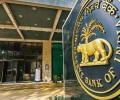
The Reserve Bank of India (RBI) on Wednesday gave banks time till October 31 to comply with its guidelines on current account and overdraft facilities. The central bank indicated that it was in no mood to change the proposed rules, but would only allow for stretching the timeline for smoother implementation. The initial deadline had ended on July 31, leading to thousands of current accounts being closed or frozen by banks. Lenders had requested the RBI for some more time to resolve the operational issues in implementing the provisions of the August 2020 circular in letter and spirit.
 © 2025 Rediff.com - Investor Information - Advertise with us - Disclaimer - Privacy Policy - Sitemap - Feedback - About us - Terms of use - Grievances